Negotiable Instruments with Special Reference to Bills of Exchange
In order to understand the use to which Bills of
Exchange stamps are put, it may be useful to have a broad idea as to how
they fit into the general commercial concept of negotiable instruments.
A negotiable instrument is a document guaranteeing the payment of a
definite amount of money, on demand or at a given time in the future.
Generally speaking, there are various forms of negotiable instruments;
these come within the categories of promissory notes, cheques and bills
of exchange. It can be argued that the description should also include
banknotes and, in certain circumstances, postal orders and money orders.
For the moment, however, I shall concentrate on bills of exchange
although later on in the book I shall examine the relevance of postal
orders and cheques.
Bills of Exchange have played a significant part
in the commercial history of the world from early times, enabling trade
to operate more smoothly than would otherwise be the case. Back as far
as the 8th Century the Chinese used fairly primitive documents known as
feitsyan to transfer money safely from one person or organisation to
another. The Lombards in Italy developed the system in the 13th to 15th
Centuries. That is, of course, how the City of London’s Lombard Street
derived its name as the centre of banking in Great Britain. Most of the
leading banks had their head office in Lombard Street, and some still
do.
The legal definition of a Bill of Exchange is
described in the Bills of Exchange Act 1909 as :-
“……an unconditional order in writing, addressed
by one person to another, signed by the person giving it, requiring the
person to whom it is addressed to pay on demand
or at a fixed or determinable future time, a sum certain in money
to or to the order of a specified person or bearer.”
Because merchants (the buyers) usually held their assets in the form of money or precious metal in banks, a shipper of the goods (the seller) could obtain immediate payment from a banker by presenting a bill signed by the buyer ( who had accepted liability). The banker would buy the bill at a discount, because it would often be due for payment at a future date, and the buyer’s bank account would be debited when the bill became due.
Governments, having seen how the banks were
benefiting from these transactions, saw an easy way of adding to the
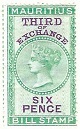
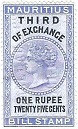
national exchequers by introducing ad valorem duty, often in the form of
stamps which had to be affixed to the bill. As far as I can see the
Governments provided nothing in return, except th